Iranian Journal of Materials Science and Engineering
Iran University of Science & Technology
Sun, Dec 28, 2025
[Archive]


Volume 18, Issue 2 (June 2021)


 Characterization of the Early Surface Films Dynamically Formed on Molten AZ91D and AM60B Alloys Under Different Atmospheres: A Comparative Study
P. 1-13

 Influence of Heat Treatment on the AA6061 and AA6063 Aluminum Alloys Behavior at Elevated Deformation Temperature
P. 1-17
 The Study of Structure and Transitional Phases in B0.95Bi0.05Ti1-xFexO3 Ceramics Synthesized by Solid State Route
P. 1-9
Najwa Gouitaa 
 , Lamcharfi Taj-dine , Bouayad Lamfaddal , Abdi Farid , Mohamed Ounacer , Mohammed Sajieddine
, Lamcharfi Taj-dine , Bouayad Lamfaddal , Abdi Farid , Mohamed Ounacer , Mohammed Sajieddine
The Effect of Temperature on the Purity of Nano-Scale Tantalum Powder Produced from Its Scrap by Reaction with Magnesium and Calcium
P. 1-7
P. 1-11
Influence of Silicon Additions on Microstructure and Mechanical Properties of Manganese Bronze Alloys
P. 1-11
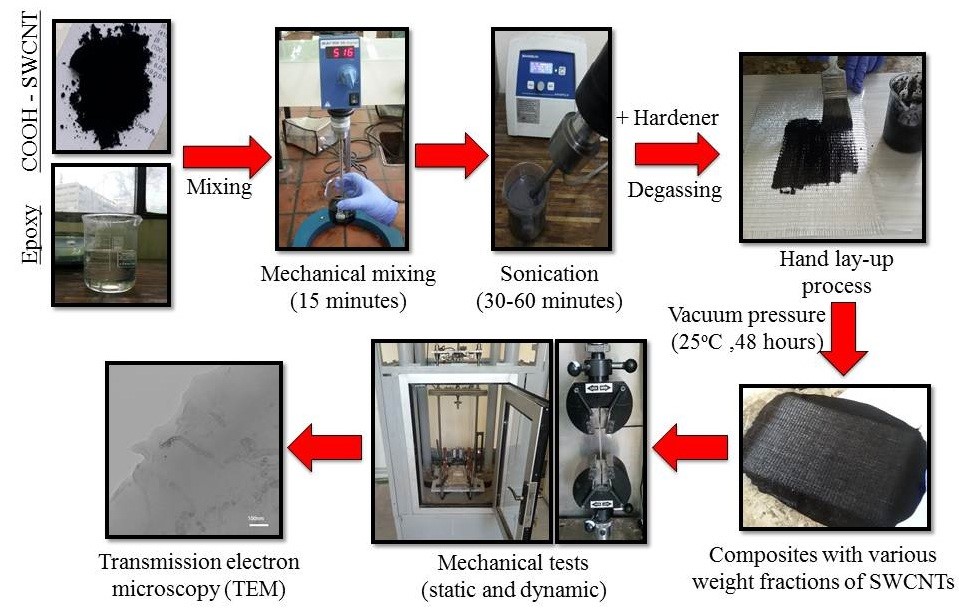
The Response of GFRP Nanocomposites Reinforced with Functionalized SWCNT Under Low Velocity Impact: Experimental and LS-DYNA Simulation Investigations
P. 1-12
 Structural and Morphological Characterization of the Expanded Graphite Obtained by Ball Milling and HF Leaching
P. 1-12
Multicrystalline Materials Analysis Based on Their Microstructure with Emphasis on Predicting Forming Limit Diagrams
P. 1-26
The Effect of Thermal Annealing on Structural, Morphological and Optical Features of BaTiO3 Thin Film assisted by e-beam PVD Technique
P. 1-12
Rheological Comparison of Silicone Rubber Crosslinking with Platinum Catalysts and Triethylamine, Methanol & Ethanolamine Solvents
P. 1-9